1/6/2010
Treadmill 4 miles
pre-run: 128 mg/dl
post-run: Ran out of test strips!
Two hours later: Bonk!
Most people who run or cycle long distances know what a bonk is: basically the body runs out readily available fuel (glucose converted to ATP) and what ever activity you are involved usually ceases, or you do. Its essentially a low blood glucose level or low blood sugar. This is especially important for diabetics. Having a low blood sugar (hypoglycemia, the opposite of the usual type 2 diabetic signifier, hyper glycemia) can be deadly for diabetics.
Diabetic endurance athletes have to balance medications, food intake, and beverage intake to make sure that they don't have hypoglycemia while running. And after a year and half of running, I've never had a low when running. I didn't on Thursday either...when I was running. My pre-running number was 128 mg/dl (milligrams of glucose per deciliter of blood) which wasn't bad considering I did not take my usual 500 mg of metformin in the morning. I did have two pieces of toast with peanut butter and a piece of cheese for breakfast along with my low-cal FRS energy drink (5 grams of carbs per 8 oz). The reading was taken about 2 hrs after breakfast, so 128 w/o any medication is a pretty good number.
I did 4 miles on the tread mill at an even pace averaging about 7 mph. Unfortunately I was out of test strips so I did not get to take a reading after my run. After the run I went directly to the Madison Mutts training center to walk our foster dogs (8) in a snow storm. By the end I was feeling low: slightly dizzy, fuzzy thinking, tingling hands, slightly blurred vision. Usually when this happens my blood sugar is somewhere in the 60s or low 70s. Normal (euglycemic) blood glucose levels are in the 80 - 100 mg/dl two hours after a meal. So I got to eat my favorite fast food meal without much guilt: Culvers single bacon cheeseburger snak pak meal. Comes with a small fry and a diet drink but that was enough to put me back in the normal range for the drive across town, which was good since the every diligent Madison snowplows were nowhere to be seen. 14 hrs after it had started snowing. Thanks Mayor Dave, you are great!
I will post more eventually on glucose levels and running, but it is very rare for active non-obese type 2 diabetics to have low readings when running less than 10 miles. In fact, its more normal to have elevated BGLs. Several factors contribute to this, including reduced insulin levels during intense exercise, dehydration, and secretion of cortisol in response to physically stressful activities that cause inflammation in joints and muscles.
skip to main |
skip to sidebar
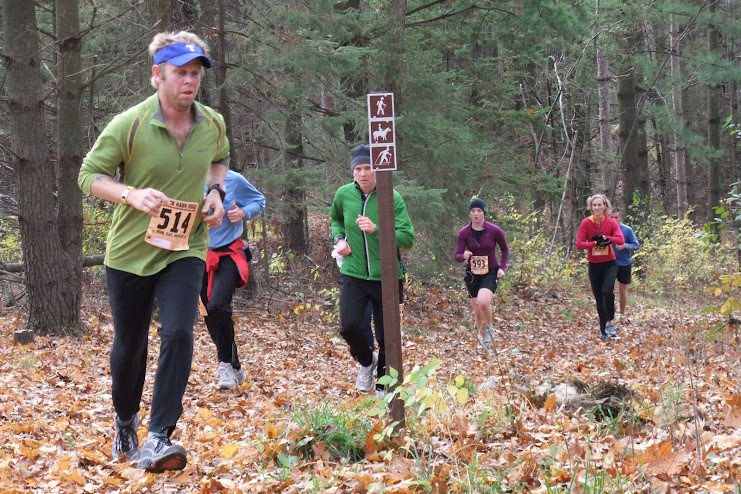
running up a steep hill at a trail race - running is fun! Just look at my face!
Discussions about running with Type2 diabetes.
Links to helpful websites for diabetic athletes and those wanting to know more about exercise

Blood Glucose Levels
I refer a lot to blood glucose (or blood sugar or BGs) in this blog. What are blood glucose ranges? There are many ways to look at this, depending on time of day, food intake, exercise, etc. The standards for fasting BGs (after 8hrs of no food):
70 - 100 = Normal, non-diabetics
101 - 125 = pre-diabetic
126 and up = diabetes
BGs spike rapidly after starting to eat and typically reach their apex about a half hour after eating. Within two hours after a meal BG levels should return to normal. In diabetics, medication, exercise, and diet help achieve this, where is in non-diabetics, your body normally does that for you.
70 - 100 = Normal, non-diabetics
101 - 125 = pre-diabetic
126 and up = diabetes
BGs spike rapidly after starting to eat and typically reach their apex about a half hour after eating. Within two hours after a meal BG levels should return to normal. In diabetics, medication, exercise, and diet help achieve this, where is in non-diabetics, your body normally does that for you.
Blog Archive
About Me
- Type 2 Runner
- Madison, WI, United States
- I will be 43 in February 2010. I was diagnosed as a Type 2 diabetic in October 2004. I started running in November 2008.
Followers
10k trail race
running up a steep hill at a trail race - running is fun! Just look at my face!
No comments:
Post a Comment