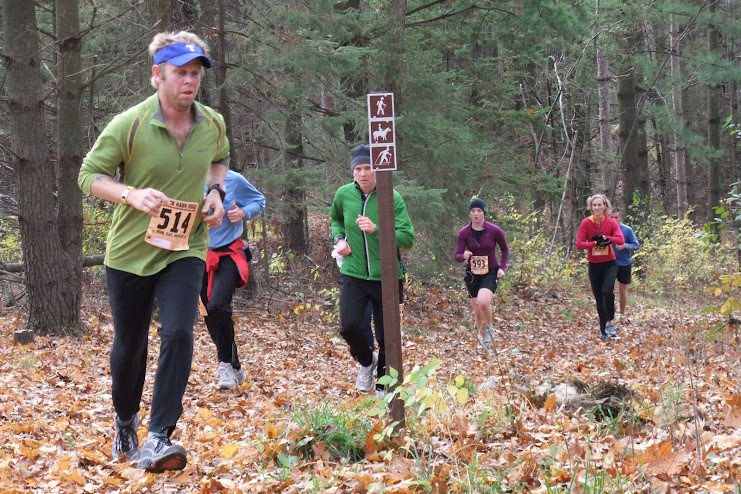
I haven't posted here in awhile. Things are in constant flux, but my blog posting will be done on http://www.tudiabetes.org/, a kind of facebook for the diabetes crowd. My stuff will get a lot more interest there. Unfortunately, they've had some tech issues for over a week.... but I am going to have to deal with that and just start working from that site.
Anyway, I am type2runner on that site as well.
Wednesday, January 27, 2010

Sunday, January 17, 2010
"Us" vs. "Them"? - Type 2 and Type 1 diabetic Athletes
Today: Spent 40 minutes on an indoor bike cross training. 10 miles.
pre-workout BG: 105
post-workout BG: 87
Yesterdays run:
4 miles on the treadmill
pre: 99
post: 102
7 mph pace
I started reading Sheri Colberg's Diabetic Athlete's Handbook a couple of days ago. This is a tremendously important resource for any diabetic athlete, or diabetic interested in exercise. It is the only book I can find right now that is geared towards diabetics who are athletes, however you define that (and more on that later). Most exercise resources for diabetics are either 1) very basic for obese or elderly diabetics 2) very minimal: most books on self-management of diabetes include a chapter at most on exercise 3) clinical books that people without any medical background can't understand.
Dr. Colberg's book, and many of the resources contained within are a breath of fresh air in community stifled with stale nutrition and exercise advice. She points readers to groups that are working with diabetic athletes as well and are promoting active lifestyles as a way to self-manage diabetes. Here are some of the groups:
http://www.insulindependence.org/
http://diabetestrainingcamp.com/
What I am finding though is that every website and book committed to promoting exercise and athleticism among diabetics, while paying lip service to Type 2 diabetics, the overwhelming focus is on Type 1s. Every athlete "spotlight" in Colberg's book is on a Type 1 athlete. Every athlete trained for the 2008 Wisconsin Ironman from the insulindependence group was a Type 1 diabetic. At diabetestrainingcamp.com, when you click on "type 2" you are directed to a "lifestyle" camp (read fat camp). If you click on "type 1" you are directed to one of the multi-sport camps that focus on running, swimming, cycling, etc. The very name "insulindepence" suggest a focus on Type 1 athletes who need insulin. The Diabetes Exercise and Sports Association (DESA) theme is: "powered by insulin".
While both DESA and insulindepence.org are inclusive in their mission statements and explanation of themes by saying that insulin is important to everyone whether Type 1, Type 1.5, Type 2, or Type 3 (traditionally non-diabetic supporters), the fact is that diabetic athletes are overwhelmingly considered to be Type 1. Why is this the case when Type 1 diabetics make up between 5 and 10% of ALL diabetics? Well, I guess it has something to do with the fact that about 80% of all Type 2 diabetics are obese (typically a body mass index, or BMI of over 30); Usually obese people are not athletes. Usually they don't exercise. Usually they are older.
But 20% of Type 2s are not obese, and that adds up to a lot more of non-obese Type 2s, than non-obese Type 1s. So why isn't anybody talking about or showcasing Type 2 athletes? I think it comes down to a couple of things. 1st, when most people think of Type 2 diabetics, they think of overweight people. There is usually a judgment associated with that: "they did that to themselves" ... sometimes this is true, sometimes it isn't. 2nd, most Type 2s are adults over 30, and we don't typically associate people over 30 with athletes. But there are a lot of "adult-onset athletes" out there, and my aim is to help make a lot more. And to show case those who are out there doing it.
Of course, all of this depends on how you define "athlete". I would define athlete as anyone who trains regularly to participate in a sport. You don't have to be world class. Do you know how often runners win races? The overwhelming majority: almost never. American Meb Keflezighi, 34 years old, won his first marathon this year, winning the NYC marathon, the first American to do so since 1982.
"Training regularly" is the most important aspect of the definition. There aren't a lot of chances to participate in endurance competitions outside of running for adults in the over 30 age group. We need to do more about that too.
pre-workout BG: 105
post-workout BG: 87
Yesterdays run:
4 miles on the treadmill
pre: 99
post: 102
7 mph pace
I started reading Sheri Colberg's Diabetic Athlete's Handbook a couple of days ago. This is a tremendously important resource for any diabetic athlete, or diabetic interested in exercise. It is the only book I can find right now that is geared towards diabetics who are athletes, however you define that (and more on that later). Most exercise resources for diabetics are either 1) very basic for obese or elderly diabetics 2) very minimal: most books on self-management of diabetes include a chapter at most on exercise 3) clinical books that people without any medical background can't understand.
Dr. Colberg's book, and many of the resources contained within are a breath of fresh air in community stifled with stale nutrition and exercise advice. She points readers to groups that are working with diabetic athletes as well and are promoting active lifestyles as a way to self-manage diabetes. Here are some of the groups:
http://www.insulindependence.org/
http://diabetestrainingcamp.com/
What I am finding though is that every website and book committed to promoting exercise and athleticism among diabetics, while paying lip service to Type 2 diabetics, the overwhelming focus is on Type 1s. Every athlete "spotlight" in Colberg's book is on a Type 1 athlete. Every athlete trained for the 2008 Wisconsin Ironman from the insulindependence group was a Type 1 diabetic. At diabetestrainingcamp.com, when you click on "type 2" you are directed to a "lifestyle" camp (read fat camp). If you click on "type 1" you are directed to one of the multi-sport camps that focus on running, swimming, cycling, etc. The very name "insulindepence" suggest a focus on Type 1 athletes who need insulin. The Diabetes Exercise and Sports Association (DESA) theme is: "powered by insulin".
While both DESA and insulindepence.org are inclusive in their mission statements and explanation of themes by saying that insulin is important to everyone whether Type 1, Type 1.5, Type 2, or Type 3 (traditionally non-diabetic supporters), the fact is that diabetic athletes are overwhelmingly considered to be Type 1. Why is this the case when Type 1 diabetics make up between 5 and 10% of ALL diabetics? Well, I guess it has something to do with the fact that about 80% of all Type 2 diabetics are obese (typically a body mass index, or BMI of over 30); Usually obese people are not athletes. Usually they don't exercise. Usually they are older.
But 20% of Type 2s are not obese, and that adds up to a lot more of non-obese Type 2s, than non-obese Type 1s. So why isn't anybody talking about or showcasing Type 2 athletes? I think it comes down to a couple of things. 1st, when most people think of Type 2 diabetics, they think of overweight people. There is usually a judgment associated with that: "they did that to themselves" ... sometimes this is true, sometimes it isn't. 2nd, most Type 2s are adults over 30, and we don't typically associate people over 30 with athletes. But there are a lot of "adult-onset athletes" out there, and my aim is to help make a lot more. And to show case those who are out there doing it.
Of course, all of this depends on how you define "athlete". I would define athlete as anyone who trains regularly to participate in a sport. You don't have to be world class. Do you know how often runners win races? The overwhelming majority: almost never. American Meb Keflezighi, 34 years old, won his first marathon this year, winning the NYC marathon, the first American to do so since 1982.
"Training regularly" is the most important aspect of the definition. There aren't a lot of chances to participate in endurance competitions outside of running for adults in the over 30 age group. We need to do more about that too.
Thursday, January 14, 2010
Drugs are good... OK?
Location: 3 miles on treadmill
pre run BG: 118
Post run BG: 114
Ran a quick three on the treadmill today, mostly because I wanted to get a workout in fast and do a few weights, which I've ignored for the last two years. More muscle means more glucose uptake and some upper body tone can help with running form as well.
No meds this morning since I woke with a fasting glucose in the non-diabetic range. Had a whole wheat english muffin with egg and FRS drink. Was suprised I was 118, since I was bonking the day before with essentially the same meal. 118 isnt bad for a diabetic, especially after eating and no meds, but still...
It was a little lower after the run, but I am not suprised it did not go lower because my run was fairly intense, anywhere from 8:30 to 7:00 minute pace for most of the run.
Another morning of normal fasting glucose: 92 mg/dl. I stopped taking Glimepiride last night and will test fasting glucose levels for the next week or so to see if I my morning levels start going up. After researching Glimepiride last night, I found that it, along with other sulfonylurea's contribute to weight gain, so I'll see if my weight goes down at all. I erroneously stated in a previous post that metformin is my favorite sulfonylurea. Metformin is actually a biguanide. Biguanides work by shutting down liver glucose production and increasing muscle glucose uptake, whereas sulfonylureas increase insulin production.
There are several other classes of oral diabetes medications including meglitinides, thiazolidinediones (TZDs), Alpha-Glucosidase Inhibitors. There are two newer categories which include the drugs Januvia and Byetta
Januvia is part of a class of diabetes medication called dipeptidyl peptidase-4 (DPP-4) inhibitors. DPP-4 is an enzyme that breaks down incretin hormones. As a DPP-4 inhibitor, the drug slows down the breakdown of incretin hormones, increasing the level of these hormones in the body.
Byetta allows your pancreas to release insulin. This drug lowers blood sugar levels only when they rise too high. Prevents the pancreas from giving out glucagon. Glucagon is a hormone that causes the liver to release its stored sugar into the bloodstream. It also helps to slow the rate at which your stomach empties after eating. This may make you feel less hungry and more satisfied after a meal.
pre run BG: 118
Post run BG: 114
Ran a quick three on the treadmill today, mostly because I wanted to get a workout in fast and do a few weights, which I've ignored for the last two years. More muscle means more glucose uptake and some upper body tone can help with running form as well.
No meds this morning since I woke with a fasting glucose in the non-diabetic range. Had a whole wheat english muffin with egg and FRS drink. Was suprised I was 118, since I was bonking the day before with essentially the same meal. 118 isnt bad for a diabetic, especially after eating and no meds, but still...
It was a little lower after the run, but I am not suprised it did not go lower because my run was fairly intense, anywhere from 8:30 to 7:00 minute pace for most of the run.
Another morning of normal fasting glucose: 92 mg/dl. I stopped taking Glimepiride last night and will test fasting glucose levels for the next week or so to see if I my morning levels start going up. After researching Glimepiride last night, I found that it, along with other sulfonylurea's contribute to weight gain, so I'll see if my weight goes down at all. I erroneously stated in a previous post that metformin is my favorite sulfonylurea. Metformin is actually a biguanide. Biguanides work by shutting down liver glucose production and increasing muscle glucose uptake, whereas sulfonylureas increase insulin production.
There are several other classes of oral diabetes medications including meglitinides, thiazolidinediones (TZDs), Alpha-Glucosidase Inhibitors. There are two newer categories which include the drugs Januvia and Byetta
Januvia is part of a class of diabetes medication called dipeptidyl peptidase-4 (DPP-4) inhibitors. DPP-4 is an enzyme that breaks down incretin hormones. As a DPP-4 inhibitor, the drug slows down the breakdown of incretin hormones, increasing the level of these hormones in the body.
Byetta allows your pancreas to release insulin. This drug lowers blood sugar levels only when they rise too high. Prevents the pancreas from giving out glucagon. Glucagon is a hormone that causes the liver to release its stored sugar into the bloodstream. It also helps to slow the rate at which your stomach empties after eating. This may make you feel less hungry and more satisfied after a meal.
Wednesday, January 13, 2010
Bonking without meds or exercise
Well, I had an early afternoon crash (low blood glucose) today. That's without taking any metformin in the morning. My BG reading was 86, which is considered a non-diabetic fasting blood glucose level. Normal fasting blood glucose typically ranges from 70 to 110 mg/dl. So I didn't take metformin (normal dose 250 – 500mg in a.m when I am not running). I did have a couple of pieces of toast with black raspberry preserves (no sugar added) and a piece of cheese. So what caused this low? My guess is that my 5 mile run yesterday and massage had an impact, as well as the fact that I continue to take glimepiride, a sulfonyurea, which is an oral med that induces the body to produce more insulin. I typically take it with the evening meal, though the normal recommendation is with morning meals. When I was taking it with morning meals, I was getting low blood sugar readings by early afternoon.
My next step in self-experimentation is to take glimepiride out of the medication line-up and see what effect it has on my morning fasting glucose levels. I have been consistently under 100. My last Hb A1C (Glycosylated Hemoglobin – a measurement giving a picture of glucose control over a three month period) was 6.5 which is the upper limit of normal.
My next step in self-experimentation is to take glimepiride out of the medication line-up and see what effect it has on my morning fasting glucose levels. I have been consistently under 100. My last Hb A1C (Glycosylated Hemoglobin – a measurement giving a picture of glucose control over a three month period) was 6.5 which is the upper limit of normal.
Tuesday, January 12, 2010
Run like the wind
OK, trot like the wind. Today was the first day I've ran outside in a few weeks. Its not always easy in the winter around here. I don't think its been above the teens for several weeks. Its not that the cold bothers me, quite the contrary, I love the cold. Its the sidewalks that suck. Some are very clean and others barely touched. Its not so bad when its a little warmer, in the 20s or above with sun, but when its colder, the sidewalks suck.
Stats:
Location: outside, yay! 20 degrees.
Distance: 4.68 miles (Garmin 305 yay!)
Time: 44:50 AVG: 9:22 pave
pre-run BG: 85 mg/dl
post-run BG: 110 mg/dl
I checked my BG before the run and it was 85, a little on the low side pre-run so I had a delicious espresso love gel by GU, my favorite gel. 25 grams of carbs with 5 grams of sugars. Primarily maltodextrine, a short chain carb polymer that the body can use quickly -- starting even in the mouth and excellerated through the small intestines, about 15 minutes to get into the blood stream. I know a lot of diabetics are carb phobic (at least if they are concerned about BG levels) but something like a GU gel is pretty easy to utilize and doesn't really raise BG levels if you engage in some endurance activity after taking it. In fact, if I am running more than an hour outside, or my BG is in the 80s or lower I will take one before a run, and even more during, depending on my running time and intensity.
Running on snowy sidewalks a week after it has snowed sucks. Clean your sidewalks. The city of madison cleans sidewalk worse than they do streets, and that's hard to do. I guess when you use frontloaders that don't come within an inch of the sidewalk, that will happen. The people who live next to those city properties are less likely to clean their sidewalks. The City of Madison: leading by example.
Stats:
Location: outside, yay! 20 degrees.
Distance: 4.68 miles (Garmin 305 yay!)
Time: 44:50 AVG: 9:22 pave
pre-run BG: 85 mg/dl
post-run BG: 110 mg/dl
I checked my BG before the run and it was 85, a little on the low side pre-run so I had a delicious espresso love gel by GU, my favorite gel. 25 grams of carbs with 5 grams of sugars. Primarily maltodextrine, a short chain carb polymer that the body can use quickly -- starting even in the mouth and excellerated through the small intestines, about 15 minutes to get into the blood stream. I know a lot of diabetics are carb phobic (at least if they are concerned about BG levels) but something like a GU gel is pretty easy to utilize and doesn't really raise BG levels if you engage in some endurance activity after taking it. In fact, if I am running more than an hour outside, or my BG is in the 80s or lower I will take one before a run, and even more during, depending on my running time and intensity.
Running on snowy sidewalks a week after it has snowed sucks. Clean your sidewalks. The city of madison cleans sidewalk worse than they do streets, and that's hard to do. I guess when you use frontloaders that don't come within an inch of the sidewalk, that will happen. The people who live next to those city properties are less likely to clean their sidewalks. The City of Madison: leading by example.
Monday, January 11, 2010
More context: after the diagnosis
When I was first diagnosed with diabetes there was some concern that I might actaully be a Type 1a or LADA (latent autoimmune diabetes in adult) diabetic. After many blood tests, which search for certain antibody markers in the blood, it was determined that I was a non-obese type 2 diabetic. The ketoacidosis was a stumper initially, and by far the most dangerous aspect of my untreated diabetes. The ph balance of human blood exists in vary narrow band of homeostasis: 7.35 to 7.45. Above or below that blood becomes acidic or basic and when that happens, systems start to shut down. When a body can no longer burn glucose (because insulin isn't present or isn't being utilized) it starts burning fat; and when the result of that burning (acetone) can no longer be properly be removed from the blood stream fully, the breath becomes "fruity" because the body is trying to get rid of the excess acetone the only way it can: through the lungs.
After stabilizing my diabetes through the fall and winter of 2004 and 2005 I was working out more and riding my bike some more. And in the spring of 2005 I became a bike mechanic for Erik's bike shop on the west side of Madison. I was in shape and felt like my life was moving foward even though I was working for a bike shop as a mechanic in my late 30s. Maybe I felt that way because I was working there. For the first time in my life I was working in a job that actually interested me...though I would find that would change soon enough. A lot of it had to do with the people I was working with. Cool guys who were for the most part also nice guys (with a few exceptions, notably one assistant manager, who was cool most of the time, except under pressure!).
I wish I had the records of what my A1Cs were at that time. They are on paper somewhere, whereas everything after 2006 is online so I can readily access that, so I will have to request those records.... ok, the beauty of the introwebs, I just went to my PCP interface and requested paper records of my results previous to September 2006.
Needless to say I was in shape, felt good, and was healthy, with one notable exception: Alcohol. At this point, in the spring of 2005, my alcohol consumption was at its lowest but was still higher than it should have been. Mostly my inappropriate usage at that point was in social situations: I was drinking a lot with the guys after work, or during fishing trips, but not at other times. It got progressively worse, many stories that I will cover, in as much depth as possible, in other posts.
After stabilizing my diabetes through the fall and winter of 2004 and 2005 I was working out more and riding my bike some more. And in the spring of 2005 I became a bike mechanic for Erik's bike shop on the west side of Madison. I was in shape and felt like my life was moving foward even though I was working for a bike shop as a mechanic in my late 30s. Maybe I felt that way because I was working there. For the first time in my life I was working in a job that actually interested me...though I would find that would change soon enough. A lot of it had to do with the people I was working with. Cool guys who were for the most part also nice guys (with a few exceptions, notably one assistant manager, who was cool most of the time, except under pressure!).
I wish I had the records of what my A1Cs were at that time. They are on paper somewhere, whereas everything after 2006 is online so I can readily access that, so I will have to request those records.... ok, the beauty of the introwebs, I just went to my PCP interface and requested paper records of my results previous to September 2006.
Needless to say I was in shape, felt good, and was healthy, with one notable exception: Alcohol. At this point, in the spring of 2005, my alcohol consumption was at its lowest but was still higher than it should have been. Mostly my inappropriate usage at that point was in social situations: I was drinking a lot with the guys after work, or during fishing trips, but not at other times. It got progressively worse, many stories that I will cover, in as much depth as possible, in other posts.
Saturday, January 9, 2010
New Toys!
New gadgets and diabetes are usually not synonamous, but I got a new glucose monitor recently and I am smitten. I've used the same brand of monitor since I was diagnosed 6 years ago: One Touch Ultra. It was the one the Dr. gave me, and that's the one I used. Like other facets of diabetes I just accepted what I was given or told and that was that. I have researched and read in depth about every other part of my life, but not diabetes until recently. I'm not sure why I've been so passive when it comes to this part of my life.
The new meter is an Accu-Chek Compact Plus. The test strips are cheaper, easier to use, require less blood, and can utilize alternate site testing. The meter itself is a bit bulkier than the other meter I used, but can do so much more and is more simple once set up. No coding. A preloaded drum of 17 strips mounts inside the meter and strips are fed out when the meter is turned on. All results can be transferred wirelessly to your computer through an infrared port (though you have to by a usb cable for the computer with an infra red reader; this also comes with management software; sold seperately). This will simplify loading this data on the web much easier.
https://www.accu-chek.com/us/home.htm
Todays running data:
Location: Treadmill
Distance: 6 miles
Time: 53:35
Pace: steady around 7 mph
pre-run BG: 100
post-run BG: 87
This was a very smooth nice run. I was planning on 4 today as usual but at 4 miles (34:53) I felt so good I just kept on going. I finished 6 mi in around 53 min. I felt really good and could have easily done 10 indoors, but I am taking it easy right now in preparation to start my marathon training.
The new meter is an Accu-Chek Compact Plus. The test strips are cheaper, easier to use, require less blood, and can utilize alternate site testing. The meter itself is a bit bulkier than the other meter I used, but can do so much more and is more simple once set up. No coding. A preloaded drum of 17 strips mounts inside the meter and strips are fed out when the meter is turned on. All results can be transferred wirelessly to your computer through an infrared port (though you have to by a usb cable for the computer with an infra red reader; this also comes with management software; sold seperately). This will simplify loading this data on the web much easier.
https://www.accu-chek.com/us/home.htm
Todays running data:
Location: Treadmill
Distance: 6 miles
Time: 53:35
Pace: steady around 7 mph
pre-run BG: 100
post-run BG: 87
This was a very smooth nice run. I was planning on 4 today as usual but at 4 miles (34:53) I felt so good I just kept on going. I finished 6 mi in around 53 min. I felt really good and could have easily done 10 indoors, but I am taking it easy right now in preparation to start my marathon training.
Friday, January 8, 2010
Bonk!
1/6/2010
Treadmill 4 miles
pre-run: 128 mg/dl
post-run: Ran out of test strips!
Two hours later: Bonk!
Most people who run or cycle long distances know what a bonk is: basically the body runs out readily available fuel (glucose converted to ATP) and what ever activity you are involved usually ceases, or you do. Its essentially a low blood glucose level or low blood sugar. This is especially important for diabetics. Having a low blood sugar (hypoglycemia, the opposite of the usual type 2 diabetic signifier, hyper glycemia) can be deadly for diabetics.
Diabetic endurance athletes have to balance medications, food intake, and beverage intake to make sure that they don't have hypoglycemia while running. And after a year and half of running, I've never had a low when running. I didn't on Thursday either...when I was running. My pre-running number was 128 mg/dl (milligrams of glucose per deciliter of blood) which wasn't bad considering I did not take my usual 500 mg of metformin in the morning. I did have two pieces of toast with peanut butter and a piece of cheese for breakfast along with my low-cal FRS energy drink (5 grams of carbs per 8 oz). The reading was taken about 2 hrs after breakfast, so 128 w/o any medication is a pretty good number.
I did 4 miles on the tread mill at an even pace averaging about 7 mph. Unfortunately I was out of test strips so I did not get to take a reading after my run. After the run I went directly to the Madison Mutts training center to walk our foster dogs (8) in a snow storm. By the end I was feeling low: slightly dizzy, fuzzy thinking, tingling hands, slightly blurred vision. Usually when this happens my blood sugar is somewhere in the 60s or low 70s. Normal (euglycemic) blood glucose levels are in the 80 - 100 mg/dl two hours after a meal. So I got to eat my favorite fast food meal without much guilt: Culvers single bacon cheeseburger snak pak meal. Comes with a small fry and a diet drink but that was enough to put me back in the normal range for the drive across town, which was good since the every diligent Madison snowplows were nowhere to be seen. 14 hrs after it had started snowing. Thanks Mayor Dave, you are great!
I will post more eventually on glucose levels and running, but it is very rare for active non-obese type 2 diabetics to have low readings when running less than 10 miles. In fact, its more normal to have elevated BGLs. Several factors contribute to this, including reduced insulin levels during intense exercise, dehydration, and secretion of cortisol in response to physically stressful activities that cause inflammation in joints and muscles.
Treadmill 4 miles
pre-run: 128 mg/dl
post-run: Ran out of test strips!
Two hours later: Bonk!
Most people who run or cycle long distances know what a bonk is: basically the body runs out readily available fuel (glucose converted to ATP) and what ever activity you are involved usually ceases, or you do. Its essentially a low blood glucose level or low blood sugar. This is especially important for diabetics. Having a low blood sugar (hypoglycemia, the opposite of the usual type 2 diabetic signifier, hyper glycemia) can be deadly for diabetics.
Diabetic endurance athletes have to balance medications, food intake, and beverage intake to make sure that they don't have hypoglycemia while running. And after a year and half of running, I've never had a low when running. I didn't on Thursday either...when I was running. My pre-running number was 128 mg/dl (milligrams of glucose per deciliter of blood) which wasn't bad considering I did not take my usual 500 mg of metformin in the morning. I did have two pieces of toast with peanut butter and a piece of cheese for breakfast along with my low-cal FRS energy drink (5 grams of carbs per 8 oz). The reading was taken about 2 hrs after breakfast, so 128 w/o any medication is a pretty good number.
I did 4 miles on the tread mill at an even pace averaging about 7 mph. Unfortunately I was out of test strips so I did not get to take a reading after my run. After the run I went directly to the Madison Mutts training center to walk our foster dogs (8) in a snow storm. By the end I was feeling low: slightly dizzy, fuzzy thinking, tingling hands, slightly blurred vision. Usually when this happens my blood sugar is somewhere in the 60s or low 70s. Normal (euglycemic) blood glucose levels are in the 80 - 100 mg/dl two hours after a meal. So I got to eat my favorite fast food meal without much guilt: Culvers single bacon cheeseburger snak pak meal. Comes with a small fry and a diet drink but that was enough to put me back in the normal range for the drive across town, which was good since the every diligent Madison snowplows were nowhere to be seen. 14 hrs after it had started snowing. Thanks Mayor Dave, you are great!
I will post more eventually on glucose levels and running, but it is very rare for active non-obese type 2 diabetics to have low readings when running less than 10 miles. In fact, its more normal to have elevated BGLs. Several factors contribute to this, including reduced insulin levels during intense exercise, dehydration, and secretion of cortisol in response to physically stressful activities that cause inflammation in joints and muscles.
Wednesday, January 6, 2010
Balance
Date of run: 1/5/2010
Location: treadmill
Start Time: 5 p.m.
Miles: 4
Time: 35:58
Starting Glucose: 144
Ending Glucose: 178
Glucose 1 hr later: 132
Glucose 2 hrs after dinner: 102
Yesterday was kind of a hectic day, for me anyway. After my morning routine of walking our 4 dogs and taking care of things around the house, I went to the Madison Mutts training facility and temporary holding shelter to help with laying a floor, moving furniture, and cleaning. I was planning on running at 10 a.m. and then going to help over there, but time got away from me so I ran afterwards. I was planning on leaving there at 2, but didn't get out until after 3. Then back to walk our 4 dogs again.
Happy new year! Boy you can always tell its a new year at the health club. My wife and I are members at a small club only a couple of blocks from our house. Low key, and for the most part very good. But trying to exercise in the evening in January is a dicey proposition. Luckily I was able to get on the only treadmill available when I came out of the locker room and do a quick (relatively!) miles. I am more of a late morning/early afternoon runner, so I tend to avoid the crush of after work athletes, but not last night. Interestingly, I would have normally been really bent out of shape with all those people, so I don't know if I was ok with it because I was expecting it or because I had been busy and active the whole day, and that helps me deal more appropriately with high activity levels.
My run on the treadmill was better than Sunday. I was on a treadmill I was used to (though no fan!) and ran at a steady 6.8 mph after the first .25 mile. I finished the last 4 minutes doing pickups (increased running pace for short intervals) to a Kelly Clarkson song: My life would suck without you. It has a perfect tempo for slow/fast/slow/fast/slow/fast finishes. For that last song I did 6.6 mph on the slow segments and 8.4 mph. on the fast segments. And this probably accounts for my higher blood glucose reading immediately after getting off the treadmill. Stress, particularly impact stress, raises cortisol levels, which in turn can lead to short term glucose spikes. When I first started run running I was very alarmed by these spikes because I was only familiar with how nutrition inputs effect glucose levels. There is so much more to it than what goes into your mouth, and I will be covering those subjects in future posts.
Balance? I was reading an article in Runners World by Kenny Moore about Bernard Legat, and Legat was discussing the balance between body and mind, particularly how important education was to him. I've spent most of my adulthood focused on mind, either ignoring body or actively abusing it. And now that I'm delving into studying the body and using the body in positive ways I've never been happier. Of course I wouldn't be here if it wasn't for Lisa. My Life Would Suck Without You. And How.
Location: treadmill
Start Time: 5 p.m.
Miles: 4
Time: 35:58
Starting Glucose: 144
Ending Glucose: 178
Glucose 1 hr later: 132
Glucose 2 hrs after dinner: 102
Yesterday was kind of a hectic day, for me anyway. After my morning routine of walking our 4 dogs and taking care of things around the house, I went to the Madison Mutts training facility and temporary holding shelter to help with laying a floor, moving furniture, and cleaning. I was planning on running at 10 a.m. and then going to help over there, but time got away from me so I ran afterwards. I was planning on leaving there at 2, but didn't get out until after 3. Then back to walk our 4 dogs again.
Happy new year! Boy you can always tell its a new year at the health club. My wife and I are members at a small club only a couple of blocks from our house. Low key, and for the most part very good. But trying to exercise in the evening in January is a dicey proposition. Luckily I was able to get on the only treadmill available when I came out of the locker room and do a quick (relatively!) miles. I am more of a late morning/early afternoon runner, so I tend to avoid the crush of after work athletes, but not last night. Interestingly, I would have normally been really bent out of shape with all those people, so I don't know if I was ok with it because I was expecting it or because I had been busy and active the whole day, and that helps me deal more appropriately with high activity levels.
My run on the treadmill was better than Sunday. I was on a treadmill I was used to (though no fan!) and ran at a steady 6.8 mph after the first .25 mile. I finished the last 4 minutes doing pickups (increased running pace for short intervals) to a Kelly Clarkson song: My life would suck without you. It has a perfect tempo for slow/fast/slow/fast/slow/fast finishes. For that last song I did 6.6 mph on the slow segments and 8.4 mph. on the fast segments. And this probably accounts for my higher blood glucose reading immediately after getting off the treadmill. Stress, particularly impact stress, raises cortisol levels, which in turn can lead to short term glucose spikes. When I first started run running I was very alarmed by these spikes because I was only familiar with how nutrition inputs effect glucose levels. There is so much more to it than what goes into your mouth, and I will be covering those subjects in future posts.
Balance? I was reading an article in Runners World by Kenny Moore about Bernard Legat, and Legat was discussing the balance between body and mind, particularly how important education was to him. I've spent most of my adulthood focused on mind, either ignoring body or actively abusing it. And now that I'm delving into studying the body and using the body in positive ways I've never been happier. Of course I wouldn't be here if it wasn't for Lisa. My Life Would Suck Without You. And How.
Monday, January 4, 2010
WHAT THE WHAT?
I initially wanted this to be sort of a training log/info hub, and it will be, but I also need to add a little context, i.e. tell a story. I'll try to keep the story telling sessions brief, but as I have two weeks before I start my marathon training plan, I will add a little back story.
I was diagnosed with Type 2 diabetes in October 2004. It was a complete surprise even though I had classic symptoms several weeks before seeing a my doctor. I was not obese, though had a few extra pounds on my 5' 7" frame -- and by a few I mean more than 20, like most Americans. I had quite a bit of weight fluctuation in my adult life usually 150 to 180 lbs. Mostly heavier towards the end of relationships, in shape in the beginning of relationships. Serial Monogamy meet Cereal Monogamy.
My classic symptoms: Polydipsia (extreme thirst), polyuria (peeing all the time).
Not classic symptom: ketoacidosis, most noticed by "fruity" breath, an attempt by the body to rid itself of acetone. This is not a typical symptom of type 2 diabetes but is of type 1. In fact, the ketoacidosis is what drove me to make the call to my doctor.
Symptoms that weren't viewed as symptoms because they were part of my "normal" repertoire: surliness, depression, and weight loss (as I was in my relationship-ending phase...).
At one point right before my diagnosis I went to the grocery store and bought over 70.00 worth of "healthy" beverages, mostly juices and sport drinks full of sugar and high fructose corn syrup. Needless to say that pushed me even further up the hyperglycemia scale. When I was finally diagnosed my blood glucose was in the mid-400s, or 4 times normal.
Amazingly, or maybe not-so amazingly, my ex, a health care professional, never said: "I think you have diabetes." A month later we were done.
Thankfully when I called my doctor, Dr. Robert Cole, he got me in the next day and made the diagnosis. I took insulin for about two weeks to stabilize my blood glucose levels. After that and then on to my favorite sulfonylurea, Metformin.
I was diagnosed with Type 2 diabetes in October 2004. It was a complete surprise even though I had classic symptoms several weeks before seeing a my doctor. I was not obese, though had a few extra pounds on my 5' 7" frame -- and by a few I mean more than 20, like most Americans. I had quite a bit of weight fluctuation in my adult life usually 150 to 180 lbs. Mostly heavier towards the end of relationships, in shape in the beginning of relationships. Serial Monogamy meet Cereal Monogamy.
My classic symptoms: Polydipsia (extreme thirst), polyuria (peeing all the time).
Not classic symptom: ketoacidosis, most noticed by "fruity" breath, an attempt by the body to rid itself of acetone. This is not a typical symptom of type 2 diabetes but is of type 1. In fact, the ketoacidosis is what drove me to make the call to my doctor.
Symptoms that weren't viewed as symptoms because they were part of my "normal" repertoire: surliness, depression, and weight loss (as I was in my relationship-ending phase...).
At one point right before my diagnosis I went to the grocery store and bought over 70.00 worth of "healthy" beverages, mostly juices and sport drinks full of sugar and high fructose corn syrup. Needless to say that pushed me even further up the hyperglycemia scale. When I was finally diagnosed my blood glucose was in the mid-400s, or 4 times normal.
Amazingly, or maybe not-so amazingly, my ex, a health care professional, never said: "I think you have diabetes." A month later we were done.
Thankfully when I called my doctor, Dr. Robert Cole, he got me in the next day and made the diagnosis. I took insulin for about two weeks to stabilize my blood glucose levels. After that and then on to my favorite sulfonylurea, Metformin.
Sunday, January 3, 2010
Bring that glucose down
I've been running now for a little over a year and have finally decided to share my experiences with others. There are very few resources out there for Type 2 (T2) diabetic runners, even those who are barely competing, or not racing at all.
My aims here are 1) record my own efforts and results in the run up to my first 26.2 2) become a resource and forum for other T2 runners, from beginners to veterans 3) explore the impact of various training regimens on my blood glucose levels and HbA1c (A1c) 4) explore the impact of nutrition imputs on running outcomes 5) explore exersize phisiology literature and sports nutrition literature in regards to T2 diabetic athletes 6) and a bunch of other stuff!
I will try to find my stride in the next few weeks here and eventually turn this in to a website with navigation tools. My intention is to post on running days.
I took ten days off over Christmas and New Years. Its the first time I've taken off more than three days in a row since I started running over a year ago. It was a welcome break. I gained no weight over that time period (153/ 5'7").
First run back was on new years day on the treadmill. Taking it slow and doing some easy running for the next couple weeks with the intention of starting a Marathon training program in the middle of Jan. for an end of May 26.2.4 miles at 6.5 mph after the first .5 miles at 3.5 miles. It was a smooth and easy run. I felt like I could have kept going for a long time.
Today? Not so much. With single digit temps and ice sidewalks I've been temporarily pushed inside. The health club looked promising with a mostly empty parking lot and only a couple of treadmills in use when I checked in. 10 minutes later, different story! I treadmill left. One I'm not used to, and one that I can't use a big fan on. I run very hot. All of this may be the reason I felt the opposite of Friday's run. 4miles sucked at 6.5, so at 2 I decreased to 6.1 and slogged through the last two miles. The upside is my blood glucose decreased 40% in the 38 minutes it took me to do the 4 miles.
Location: Health club treadmill
Distance: 4 miles
Pace: 9:13/9:50
Starting blood glucose: 202 (unusually high for me, 1 hour after eating two hotdogs for lunch!)
Ending blood glucose: 120
My aims here are 1) record my own efforts and results in the run up to my first 26.2 2) become a resource and forum for other T2 runners, from beginners to veterans 3) explore the impact of various training regimens on my blood glucose levels and HbA1c (A1c) 4) explore the impact of nutrition imputs on running outcomes 5) explore exersize phisiology literature and sports nutrition literature in regards to T2 diabetic athletes 6) and a bunch of other stuff!
I will try to find my stride in the next few weeks here and eventually turn this in to a website with navigation tools. My intention is to post on running days.
I took ten days off over Christmas and New Years. Its the first time I've taken off more than three days in a row since I started running over a year ago. It was a welcome break. I gained no weight over that time period (153/ 5'7").
First run back was on new years day on the treadmill. Taking it slow and doing some easy running for the next couple weeks with the intention of starting a Marathon training program in the middle of Jan. for an end of May 26.2.4 miles at 6.5 mph after the first .5 miles at 3.5 miles. It was a smooth and easy run. I felt like I could have kept going for a long time.
Today? Not so much. With single digit temps and ice sidewalks I've been temporarily pushed inside. The health club looked promising with a mostly empty parking lot and only a couple of treadmills in use when I checked in. 10 minutes later, different story! I treadmill left. One I'm not used to, and one that I can't use a big fan on. I run very hot. All of this may be the reason I felt the opposite of Friday's run. 4miles sucked at 6.5, so at 2 I decreased to 6.1 and slogged through the last two miles. The upside is my blood glucose decreased 40% in the 38 minutes it took me to do the 4 miles.
Location: Health club treadmill
Distance: 4 miles
Pace: 9:13/9:50
Starting blood glucose: 202 (unusually high for me, 1 hour after eating two hotdogs for lunch!)
Ending blood glucose: 120
Subscribe to:
Comments (Atom)